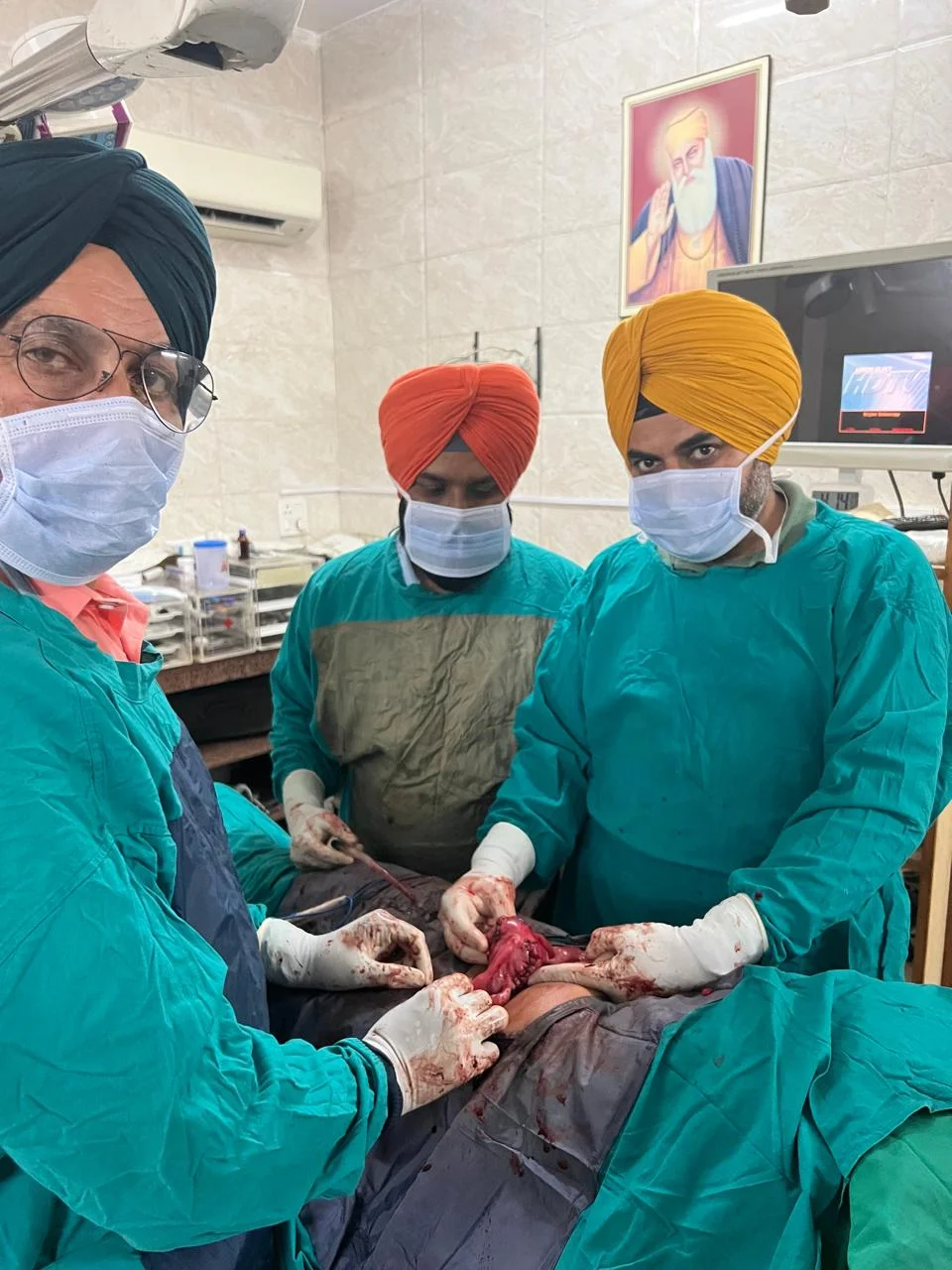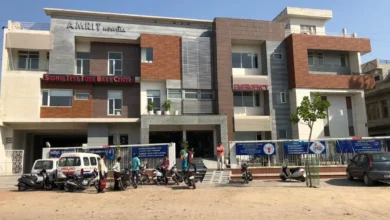

When a family takes a mother to hospital for pain in the upper abdominal area and a possible gallbladder operation, the family is already under pressure. They are worried about the patient, worried about the surgery, worried about money, and forced to depend on the doctor and hospital staff.
That is exactly why a hospital must be more transparent, not less.
A patient family should not have to fight for a bill. They should not have to argue for a medicine receipt. They should not be given a pharmacy bill that, according to them, includes items they did not purchase. And they should never be pressured to sign a blank medical or financial form.
This article is based on one son’s real experience at Amrit Hospital, Moga, combined with public records, Google review patterns, consumer-court cases, patient-rights sources, and media reports involving Dr Harjinder Singh Sidhu, also searched as Dr H.S. Sidhu Moga.
The purpose is simple: patients searching for Amrit Hospital Moga reviews, Dr Harjinder Singh Sidhu review, H.S. Sidhu Moga, Amrit Hospital Moga court case, Amrit Hospital wrong operation allegations, or Amrit Hospital Moga death protest should be able to see the warning signs, not only hospital marketing.
Last updated: July 17, 2026.
At a glance: what this article says
This is an opinion-based patient-family account supported by public records. It does not ask readers to trust one side blindly. It asks readers, patients and Punjab authorities to look at the pattern: one family’s July 2026 experience, Google review complaints, consumer-court records, a June 2026 media-reported protest, and direct questions about billing, blank forms, consent and hospital paperwork.
- Patient-family allegation: The son says his mother was admitted at Amrit Hospital Moga around 7 pm on July 15, 2026, for planned laparoscopic surgery, but the family says they faced billing concerns and pressure to sign a blank form before key details were filled.
- Billing concern: The son says he paid around Rs 1,600 in cash and was told, “Bill ki kya zaroorat hai jab online se paid hai?” even though he says the payment was cash and a bill should have been issued anyway.
- Blank-form concern: The son says staff pressured him to sign first and let them fill the form later. He says the doctor later treated the blank-form objection as a small inconvenience.
- Google review pattern: When checked on July 16, 2026, the Amrit Hospital Moga Google listing showed around 3.6 stars from 31 reviews, including multiple one-star reviews raising concerns about staff, money, response and hygiene.
- Ramesh Gill case: Public records show a consumer-court matter involving Dr Harjinder Singh Sidhu, Dr Ranpinder Kaur and Amrit Hospital, with findings around gallbladder surgery, consent, bowel injury, delayed repair, deficiency in service and compensation.
- Balwinder Kaur case: Public records show Amrit Hospital was found deficient in a cashless-treatment process and directed to pay Rs 1,20,000 with 9% annual interest.
- Harmander Singh case: Public records show another matter involving Dr Harjinder Singh Sidhu and allegations connected with treatment at Amrit Hospital. Readers should review the full record directly.
- June 2026 media report: Jagbani reported a protest outside Amrit Hospital Moga after a woman’s death, with family allegations of wrong operation and negligence. The doctor denied the allegations in that report.
- Public-interest point: If blank forms or incomplete bills are being handled loosely, the issue is not only one family dispute. It becomes a patient-safety, consent and billing-accountability concern, even when a patient is paying cash.
Public-record summary of cases and reports
| Record or report | Why it matters for patients | Direct source |
|---|---|---|
| Harjinder Singh Sidhu v. Ramesh Gill | Consumer-court record involving gallbladder surgery, consent, bowel injury, delayed repair, deficiency in service and compensation. | Indian Kanoon / CaseMine |
| Amrit Hospital v. Balwinder Kaur | Cashless-treatment dispute where Amrit Hospital was found deficient and the order included Rs 1,20,000 with 9% annual interest. | CaseMine |
| Dr Harjinder Singh Sidhu v. Harmander Singh | Public consumer record involving allegations connected with treatment at Amrit Hospital. Included as a public record readers should examine directly. | Indian Kanoon |
| Jagbani June 2026 Amrit Hospital Moga report | Media report about protest after a woman’s death, with family allegations and the doctor’s denial both part of the public record. | Jagbani |
| Live Punjab HD Instagram reel | Public social-media coverage of the same Amrit Hospital Moga dispute. Not an official finding, but evidence that the dispute circulated publicly. | |
| Yashmeen Kaur v. Moga Medicity | Separate Moga Medicity record mentioning Dr H.S. Sidhu, M.S. (General Surgery). Treated here only as a verification lead unless identity/involvement is officially confirmed. | Indian Kanoon / Tribune |
Quick links to public records, reviews and reports
Readers who want to verify the public record can start here: Google Maps reviews for Amrit Hospital Moga, Harjinder Singh Sidhu v. Ramesh Gill on Indian Kanoon, Harjinder Singh Sidhu v. Ramesh Gill on CaseMine, earlier Ramesh Gill appeal entry from 2016, Amrit Hospital v. Balwinder Kaur, Dr Harjinder Singh Sidhu v. Harmander Singh, Jagbani report on the June 2026 Amrit Hospital Moga protest, and the Live Punjab HD Instagram reel on the dispute.
A separate public record also names Dr H.S. Sidhu, M.S. (General Surgery) in a Moga Medicity surgical-team context. Because that case is against Moga Medicity and not Amrit Hospital, this article treats it as a verification lead rather than a confirmed Amrit Hospital finding: Yashmeen Kaur v. Moga Medicity on Indian Kanoon and The Tribune report on the Rs 18 lakh compensation order.
Some legal databases and public-record websites can be difficult for automated crawlers to read consistently. For that reason, this article also gives crawler-readable summaries in plain text: party names, forum, dates, allegations, findings, compensation directions, denials and source links. Readers should still open the original records directly before forming conclusions from any single case.
Why this doctor and hospital are being named
This article names Dr Harjinder Singh Sidhu because public records connect his name with Amrit Hospital, Moga.
Amrit Hospital’s own website lists him as MBBS, MS, FICS and Chief Laparoscopic Surgeon. Punjab Medical Council electoral-roll records list a Dr Harjinder Singh Sidhu with MBBS 1987, MS Surgery 1998, registration number 24852, and an address at Amrit Hospital, Amritsar Road, Sant Nagar, Moga. A Moga doctors directory also lists Dr Harjinder Singh Sidhu at Amrit Hospital.
This identification is not being included to promote the doctor. It is included because patients have a right to know which public records, public complaints, public reviews and court findings are attached to the hospital and doctor they may be considering for treatment.
The concern is not only one family’s experience. The concern is the pattern: billing concerns, blank-form pressure, poor public reviews, consumer-court findings, serious patient-side allegations, a media-reported protest after a patient death, and public calls for investigation.
The family first trusted the referral
The patient’s son says his mother first developed pain and burning in the upper abdominal area. The family normally trusted a local hospital and a local doctor, referred to in this article as Dr A. Singh. This is not the referring doctor’s real name. The family specifically asked that his identity not be used because this article is not about him.
According to the son, Dr A. Singh had treated the family honestly in the past and guided them properly. He referred them to a doctor in Moga for laparoscopic surgery. The family then went to Amrit Hospital, Moga, where they say they met Dr Harjinder Singh Sidhu.
The family says they were ready to go ahead. They understood that hospital treatment can involve procedure charges, ward charges, medicines, tests and other legitimate costs. The son says they were not looking for a fight and were ready to pay whatever was legitimate and properly explained.
The problem, according to him, started after admission.
Red flag 1: Money taken, but no bill given easily
The son says the patient was admitted around 7 pm on July 15, 2026, for a planned laparoscopic operation. According to him, the patient was kept in the emergency ward because the hospital file upload had to be done around 11 am the next day. Because it was evening, there was not much hospital activity that night.
But before this admission process, in the afternoon, the family had already paid around Rs 1,600 for tests or hospital-related work. The son says the payment was made in cash. When he asked for a bill, the reply he says he received made the situation more suspicious, not less: “Bill ki kya zaroorat hai jab online se paid hai?” In English, that means: “What is the need for a bill when it has been paid online?”
According to the son, that answer did not make sense because he says the payment was made in cash. Even if the payment had been made by card, the patient would still have the right to a bill. A card transaction is not a substitute for an itemized hospital bill.
He says he insisted multiple times. Instead of simply issuing a proper bill, he says he was told to speak to the doctor for the bill.
That is not a small issue. A bill is not a favour. A bill is proof. It protects the patient, the hospital, the doctor and the payment record. If money is taken properly, the bill should be given properly.
When a hospital takes money but does not give a receipt immediately, patients naturally start asking what is happening behind the counter.
Red flag 2: The pharmacy bill did not feel right
The family says the next issue happened at the hospital pharmacy.
The son says he bought medicines and asked for a bill. According to him, the bill was not given immediately. He returned to the ward, looked at the medicines, and felt the total amount did not match the printed MRPs of the medicines he had received.
He then went back to the pharmacy and asked for either a proper bill or a refund. According to him, only then was a bill given. But he says that bill included things he did not even purchase.
From the son’s side, this was not a minor confusion. It felt like a warning sign. If a patient attendant has to demand a bill, argue over medicines, and then receives a bill that allegedly includes wrong items, that does not build trust before surgery.
It also connects directly with the wider patient-rights issue. The Government of India patient-rights charter says patients and their representatives have a right to patient records, investigation reports and detailed itemized bills. It also says patients should not be forced to buy medicines only from the hospital pharmacy if they can get medicines elsewhere.
Red flag 3: The family says they were asked to sign a blank form
The most serious concern came when the hospital file was being processed and the family says they were asked to sign a blank form. This is the part the son says made him feel that something bigger could be going on.
The son says reception staff called him and asked for documents. He gave the documents. Then, according to him, they handed him a form and asked him to sign it.
He says the form was blank.
According to him, important fields were empty: his name, the patient’s name, the doctor’s name, the procedure name, ward charges, procedure charges and other details. He refused to sign.
The conversation, according to the son, was not calm paperwork. It was pressure.
He says staff told him: “Sign kroge tabhi to fill hoga na.” In English: “Only if you sign will it be filled.”
His response was simple: first fill the form, then ask for the signature. He says he told them he could not sign an empty form. He sat in the waiting area for around five to ten minutes and then went back to ask for an update.
According to him, another woman at the reception then handed the file aggressively and said words to the effect of: “Sign this.” The son says he again pointed out that the form was still not filled. He says another male staff member also joined in and pressured him to sign.
The son says he told them he was not going to sign under pressure. He says voices were raised. He says he was also forced to raise his voice because the staff kept pushing the same blank-form demand.
According to the son, one staff member then said: “Asi tuhadi zameen thodi le rahe aan.” In English: “We are not taking your land.”
That sentence is exactly the problem. A blank form in a hospital is not a joke. It may not be land, but it can involve consent details, billing details, procedure details, ward charges and patient liability. It can affect a patient’s medical and financial record.
The son says he tried to explain this politely first. He told the staff that they were educated and should understand that a signature is supposed to come after details are filled. He says one woman replied that she would write his name after he signed. When he said she could simply ask his name, he says the response was: “Sign se hi to naam dekhungi.” In English: “I will see the name from the signature only.”
The son says that made no sense. A signature can be a full name, initials, a mark or any personal sign. It is not a reliable way to fill a patient form. To him, this was not confusion. It looked like staff knew exactly what they were doing and still wanted the signature first.
He says after the argument continued, staff told him to talk to the doctor.
From the son’s point of view, this is where the word “scam” enters the story. He is not saying he audited the hospital’s accounts. He is saying that when a hospital asks a patient family to sign an empty form before filling the details, it creates room for misuse. If billing details, procedure details or consent details are filled later, the patient has already lost control over what they signed.
That concern is serious regardless of how the patient is paying. Whether a patient is paying cash, online, by card, through a package, through an employer, or through any other arrangement, a blank form should not be signed first and filled later. The question is obvious: what exactly is being written later, and who checks it?
The doctor’s response, according to the family
The son says the doctor came for a ward round around 2:30 pm or later on July 16, 2026. The doctor asked the patient how she was feeling. The patient said she was fine. The doctor then turned to the son and asked whether they wanted to proceed with the operation.
The son says he replied that yes, they wanted to proceed, but there was an issue. He told the doctor that staff wanted him to sign a blank form.
According to the son, the doctor’s response shocked him. He says the doctor said words to the effect of: “Don’t create inconvenience on small things.”
The son says he immediately explained that it was not a small thing. He says he told the doctor the form was blank, with empty spaces for his name, the patient’s name, the doctor in charge, the procedure name, ward charges, procedure charges and other details.
The son says he asked the doctor to show the form and said he would point out the blank fields. According to him, the doctor’s position did not change. The doctor allegedly said the family was supposed to sign and that this was how it was done there.
That is where the trust broke. The son says he told the doctor that he had trusted him for his experience, but this process did not keep him faithful in the treatment. He says he told the doctor the family was no longer comfortable.
According to the son, the doctor then made it clear: sign or leave. The family chose to leave.
That decision matters. A family had already admitted the patient, paid money, bought medicines and prepared mentally for surgery. They still chose to walk out because signing an empty form under pressure felt more dangerous than losing time.
Why blank forms are a serious patient-safety and billing concern
A blank hospital form is dangerous on its own. It does not become acceptable just because a patient is paying cash, paying online, paying by card, using a package, or waiting for a file to be uploaded. The problem is the blank form itself.
Hospital forms, procedure names, charges, consent records, ward details and patient declarations are not casual paperwork. They can affect the patient’s treatment record, financial liability, consent history, discharge record and future accountability.
If a form is blank, a patient should not sign it. If a hospital says “sign first and we will fill it later,” the patient should stop the process and ask for the form to be filled first. If pressure continues, the patient should write “refused to sign blank form” and escalate to hospital management, district health authorities, the medical council or a patient-grievance mechanism.
The son’s concern is direct: if this happened to him, how many other families may have signed without questioning? If the staff themselves said he was the first one creating an issue and everyone signs before they fill, that should worry the government.
That is not just a patient dispute. That is a possible system issue.
Google reviews show the concern is not isolated
Google reviews are not court judgments. Some people leave unfair reviews. Some people leave positive reviews. But when multiple negative reviews repeat similar themes, patients should pay attention.
When checked again on July 17, 2026, the Google Maps listing for Amrit Hospital Moga showed a rating of around 3.6 from 31 reviews. The visible breakdown included 15 five-star reviews, 5 four-star reviews, 3 three-star reviews, 1 two-star review and 7 one-star reviews. Google review topics also showed “health” and “money” as topics mentioned by reviewers.
Several exact visible Google-review snippets raised concerns. These are short excerpts from the live listing as checked on July 17, 2026:
- Navneet Kaur, 1 star: “Please DO NOT go to this doctor.”
- Jagjeet Singh, 1 star: “the most weak point of the hospital is the hospital staff.”
- THE LAST JOURNEY, 1 star: “Don’t waste your time, money and health.”
- THE LAST JOURNEY also wrote: “It’s a dirty hospital no cleaning at all.”
- Manie Sidhu, 1 star: “Money minded dr, poor and unprofessional staff.”
- jayesh aradeshana, 2 stars: “The hospital staff is rude + not Co operative.”
- Binder Garcha, 1 star: “No good.”
This does not mean every review is automatically true. But it does mean the family’s experience should not be dismissed as one angry patient attendant. There is already a public-review pattern around money, staff behaviour, hygiene, response and patient handling.
If a hospital has repeated one-star reviews and a family is also saying they were pressured to sign a blank form, the safe response is not to ignore it. The safe response is investigation.
Consumer-court record 1: Ramesh Gill v. Dr Harjinder Singh Sidhu and Amrit Hospital
The most serious public consumer-court record found is Harjinder Singh Sidhu v. Ramesh Gill, decided by the Punjab State Consumer Disputes Redressal Commission on April 26, 2018. This is not a random online comment. It is a consumer-court record involving gallbladder surgery, consent, bowel injury, complications, deficiency in service and compensation.
The record involved Dr Harjinder Singh Sidhu, Dr Ranpinder Kaur and Amrit Hospital as appellants/opposite parties, and Ramesh Gill as the complainant. The dispute came from a gallbladder-stone case where the complainant was admitted for laparoscopic surgery. According to the record, the surgery was converted to open cholecystectomy.
The complainant’s side alleged that open surgery was done without proper consent, that severe complications followed, and that she later required treatment at CMC Hospital, Ludhiana. The record refers to an entero-cutaneous fistula, feculent discharge from the umbilical port site, further surgery at CMC, ICU treatment and serious financial and mental suffering.
The doctor and hospital denied negligence. They argued that conversion from laparoscopic surgery to open surgery was due to adhesions and medical difficulty, that risk had been explained, and that bowel injury can be a known complication of laparoscopic surgery.
But the State Commission did not accept the defence on the key issues. It recorded that during surgery conducted by OP no.1 at OP no.3 hospital, the complainant faced bowel injury, that prompt efforts were not made to repair it, and that the complainant suffered consequences including entero-cutaneous fistula. The Commission also found deficiency in keeping the complainant uninformed about conversion from laparoscopic surgery to open surgery. It also treated the demand for another Rs 50,000 for another surgery, instead of repairing the injury, as a serious deficiency.
The amounts visible in the public record make the case even more serious. The record says the complainant alleged that Amrit Hospital charged Rs 50,000 for the surgery, that another Rs 50,000 was demanded for a further procedure after stool discharge appeared from the stitch area, and that the complaint sought refund/compensation including Rs 5,00,000 for CMC Hospital medical expenses, Rs 10,00,000 for deficiency in service and unfair trade practice, and legal expenses. The State Commission dismissed the appeal and affirmed the District Forum order directing compensation.
This should worry any patient. A court record where compensation is affirmed after findings involving consent, bowel injury, delayed repair and deficiency in service is not a small historical detail. It goes directly to patient safety, surgical consent, accountability and trust.
For patients, this record matters because the current family’s case also started with gallbladder-related treatment and a planned laparoscopic operation at Amrit Hospital. The court record does not prove the new family’s allegations automatically, but it shows that concerns involving laparoscopic surgery, consent, complications, communication and Amrit Hospital have appeared before a consumer forum before.
Case links: Harjinder Singh Sidhu v. Ramesh Gill on Indian Kanoon, Harjinder Singh Sidhu v. Ramesh Gill on CaseMine, and the earlier 2016 Ramesh Gill appeal entry on CaseMine.
Consumer-court record 2: Amrit Hospital v. Balwinder Kaur and cashless treatment
The second major public record is Amrit Hospital v. Balwinder Kaur, decided by the Punjab State Consumer Disputes Redressal Commission on March 13, 2015. This case is extremely relevant because it involved cashless treatment, pre-authorisation paperwork and money being taken from the patient side.
Amrit Hospital was the appellant through authorised signatory Dr Harjinder Singh Sidhu. The patient’s side was connected with the Bhai Ghanhiya Sehat Sewa Scheme. The husband of the complainant was admitted at Amrit Hospital, later discharged, and died two days later. The complainant alleged that the card had been shown and cashless treatment was requested, but Amrit Hospital took money from the family instead.
The State Commission recorded that in District Moga, Amrit Hospital was one of the panel hospitals. The Commission found that once the patient’s side showed the card and approached the hospital as a member entitled to cashless treatment, the hospital was under an obligation to move the papers to the TPA for cashless treatment.
Instead, the Commission recorded that Amrit Hospital did not move the papers and took money from the complainant for treatment. The Commission rejected the hospital’s argument that it was approved only for surgery and not other treatment, calling that plea unsupported by documentary evidence. It found deficiency on the part of the hospital and dismissed the appeal.
The financial direction was not minor. The District Forum had directed Amrit Hospital/OP No.5 to pay Rs 1,20,000 to the complainant with 9% annual interest from August 26, 2011 until actual payment. The State Commission dismissed Amrit Hospital’s appeal and also recorded that the Rs 25,000 deposited with the Commission at the time of appeal should be remitted to the complainant after the required period, subject to any stay.
This matters as a separate public record about paperwork, patient payment and hospital accountability. It should not be confused with the current son’s blank-form allegation, which is about the form itself. The point is that when a hospital already has a public record involving paperwork and money-handling deficiency, any new allegation about blank forms, missing bills or pressure at the counter deserves immediate attention from Punjab health authorities.
Case link: Amrit Hospital v. Balwinder Kaur on CaseMine.
Public case search: Dr Harjinder Singh Sidhu and Harmander Singh
Public case searches also show a matter titled Dr Harjinder Singh Sidhu v. Harmander Singh, decided by the National Consumer Disputes Redressal Commission on June 14, 2019.
The record involves treatment at Amrit Hospital run by Dr Harjinder Singh Sidhu and allegations connected with a kidney-stone procedure, later medical problems and the patient’s death. This article is not using that record as proof of the current family’s experience. It is included because it is another public record that patients and authorities may find when researching the doctor’s history, and because repeated serious patient-side allegations around treatment cannot be brushed aside as ordinary review noise.
Patients should read the full public record directly before forming conclusions from that case alone. The point here is broader and serious: allegations involving this doctor and hospital have reached consumer forums more than once, and at least two public State Commission records directly involve Amrit Hospital, cashless-treatment obligations, laparoscopic/gallbladder surgery, medical negligence findings, deficiency in service or compensation directions.
Case link: Dr Harjinder Singh Sidhu v. Harmander Singh on Indian Kanoon.
June 2026 media report: protest outside Amrit Hospital after a woman’s death
On June 5, 2026, Jagbani reported a tense situation outside Amrit Hospital, Moga, after the death of a woman patient. According to the report, family members alleged a wrong operation and negligence, staged a protest, blocked the road for some time, and demanded an impartial investigation.
The same report also recorded Dr Harjinder Singh Sidhu’s response. He denied the allegations and said the operation was performed according to medical procedure and rules. He claimed the patient’s death was not due to negligence.
That denial is part of the public record. But so is the protest. So is the family’s allegation. So is the demand for investigation. So is the fact that police and administration reportedly reached the spot.
A related Instagram reel by Live Punjab HD also circulated the incident publicly. Social videos and reels are not official findings, but they matter because they show that public concern around Amrit Hospital is not hidden. People in Moga are talking about it. Families are warning others. The number of deaths or similar incidents being discussed publicly should be officially verified by the authorities, not ignored.
If claims circulating in public are wrong, an official investigation can correct the record. If even some of them are right, then silence puts more patients at risk.
Media links: Jagbani report on the June 2026 Amrit Hospital Moga protest and Live Punjab HD Instagram reel on the Amrit Hospital Moga dispute.
A separate Moga Medicity record authorities should verify
During deeper research, another public consumer record appeared: Yashmeen Kaur v. Moga Medicity (Multispeciality Hospital). The case concerned Moga Medicity, not Amrit Hospital. The order refers to a surgical team that included Dr H.S. Sidhu, M.S. (General Surgery).
This article is not treating that as a confirmed finding against Dr Harjinder Singh Sidhu of Amrit Hospital unless an authority verifies identity and involvement. But the name, initials, qualification and city make it a research lead that should not be ignored.
If it is the same doctor, authorities should examine it while reviewing the wider public record. If it is a different doctor, that should also be clarified publicly so the record is not confused.
Verification-lead links: Yashmeen Kaur v. Moga Medicity on Indian Kanoon and The Tribune report on the Moga Medicity compensation order.
What patients have the right to demand
The Government of India patient-rights charter is clear on several points that matter in this story. Patients and their representatives have the right to information about the illness, proposed investigations, care, expected results, possible complications and expected costs. They have the right to know rates. They have the right to access records, reports and detailed itemized bills. They have the right to informed consent before surgery or specific treatment. They have the right to seek a second opinion. They also have the right to choose where to buy medicines or get tests, where relevant.
That means a hospital cannot treat bills, forms, costs and consent as casual paperwork. These are patient rights.
A blank form is not informed consent. A missing bill is not transparency. A medicine bill with disputed items is not patient trust. Pressure at the reception counter is not healthcare.
Questions Punjab authorities should ask Amrit Hospital Moga
If hospitals are meant to protect patients and maintain reliable medical and billing records, then the government should not wait for more families to suffer before checking the process.
- Are patients or attendants at Amrit Hospital ever asked to sign blank forms before details are filled?
- Who fills the forms after signature, and who verifies the details?
- Are procedure names, ward charges, medicine charges, test charges and extra charges audited?
- Are all payment receipts and test bills issued immediately?
- Are hospital pharmacy bills itemized and matched to the medicines actually issued?
- Are patients clearly told whether they can buy medicines outside the hospital pharmacy?
- Does the hospital maintain signed informed-consent records before surgery and before conversion of procedure type?
- How many complaints have been filed against Amrit Hospital or Dr Harjinder Singh Sidhu with health authorities, consumer forums, police, billing channels or medical regulators?
- Was there an official inquiry into the June 2026 death-protest report, and what was the result?
- Has any government or regulator audit checked whether patient billing, consent forms and procedure records were handled correctly?
These are not unreasonable questions. They are basic accountability questions.
What patients should do before treatment at any private hospital
This article is about Amrit Hospital Moga, but the checklist applies everywhere.
- Never sign a blank form, blank consent, blank estimate or blank hospital document.
- Take a photo of every form before and after signing it.
- Write “not blank at time of signing” near your signature if needed.
- Ask for the procedure name, package name, estimated charges and extra charges in writing.
- Demand itemized bills for tests, hospital charges, pharmacy, consumables and procedure charges.
- Check medicine MRPs against the pharmacy bill.
- Ask whether you can buy medicines outside if the hospital pharmacy price is high.
- Ask for copies of test reports and case papers.
- Before surgery, ask what could cause conversion from laparoscopic to open surgery and whether separate consent is needed.
- If staff pressure you, record dates, times, names and exact words immediately.
- If any staff member pressures you to sign first and fill later, stop the process and escalate immediately.
- If you feel unsafe, take a second opinion before surgery when the situation is not an emergency.
The son’s warning to other families
The son says he entered the hospital ready for treatment, not to create a scene. He says he was ready to pay legitimate charges and respected the medical process. But after no easy bill, a disputed pharmacy bill, pressure to sign a blank form and a doctor allegedly treating that concern as a small inconvenience, he no longer trusted the hospital enough to let his mother undergo surgery there.
His warning is simple: once you sign a blank form, you may not know what will be written above your signature later. If patient money, medical records, procedure details or consent documents are at risk, the issue deserves urgent investigation.
This is what the Punjab government should do next
The Punjab government, State Health Agency, district health authorities and medical regulators should not wait for a viral video or another road protest. They should examine the process now.
- Audit recent billing, consent forms, procedure records and discharge paperwork from Amrit Hospital Moga.
- Check whether any forms were signed before being fully filled.
- Review patient bills, medicine bills and pharmacy inventory against issued items.
- Review informed-consent practices for laparoscopic surgery and conversion to open surgery.
- Review complaint records, Google review patterns and prior consumer-court findings.
- Publish whether the June 2026 protest/death allegation was investigated and what was found.
- Take strict action against any hospital found misusing blank forms, consent documents, procedure records or billing.
Final word
Not every doctor is bad. Not every hospital is corrupt. The son himself says the referring doctor, named here only as Dr A. Singh, treated the family with honesty and proper guidance. That is exactly why this experience at Amrit Hospital Moga felt so disturbing to him.
Patients searching for Amrit Hospital Moga or Dr Harjinder Singh Sidhu should read the hospital website, but they should also read the reviews, court records, patient-rights rules and media reports. They should ask hard questions before signing anything and should not ignore red flags just because a hospital looks established.
If the hospital has answers, it should provide them publicly. If the government has oversight power, it should use it. If other families have similar experiences, they should document everything and speak up before the next warning comes from another family standing outside a hospital gate demanding answers.
FAQ: Amrit Hospital Moga, Dr Harjinder Singh Sidhu and public records
What is this article about?
This article is an opinion-based patient-family account about Amrit Hospital Moga and Dr Harjinder Singh Sidhu, supported by public sources including Google reviews, consumer-court records, patient-rights guidance, a Jagbani news report and an Instagram reel covering a public dispute.
What did the family personally allege?
The son alleges that after his mother was admitted for planned laparoscopic surgery, the family faced billing issues, a disputed pharmacy bill and pressure to sign a blank hospital form before key details were filled.
Which public cases are linked in this article?
The article links to public records for Harjinder Singh Sidhu v. Ramesh Gill, Amrit Hospital v. Balwinder Kaur, Dr Harjinder Singh Sidhu v. Harmander Singh, and a separate Moga Medicity/Yashmeen Kaur record that mentions Dr H.S. Sidhu as a verification lead.
Is Dr Harjinder Singh Sidhu linked to Amrit Hospital Moga court cases?
Yes. Public records link Dr Harjinder Singh Sidhu with Amrit Hospital Moga in consumer-case records including Harjinder Singh Sidhu v. Ramesh Gill and Dr Harjinder Singh Sidhu v. Harmander Singh. Amrit Hospital v. Balwinder Kaur also lists Amrit Hospital as appellant through authorised signatory Dr Harjinder Singh Sidhu. Readers should review each source and outcome directly.
Was Amrit Hospital found deficient in a cashless-treatment case?
Yes. In Amrit Hospital v. Balwinder Kaur, the Punjab State Consumer Disputes Redressal Commission dismissed Amrit Hospital’s appeal and the article cites the public record showing a direction to pay Rs 1,20,000 with 9% annual interest.
What does the Ramesh Gill case show?
The Ramesh Gill record involved gallbladder surgery, conversion from laparoscopic to open surgery, consent concerns, bowel injury, delayed repair, deficiency in service and compensation. It is important because the current family also visited Amrit Hospital for gallbladder-related laparoscopic surgery.
Did the doctor deny allegations in the June 2026 media report?
Yes. The Jagbani report cited in this article included family allegations after a woman’s death and also recorded Dr Harjinder Singh Sidhu’s denial, saying the operation was performed according to medical procedure and rules.
What should patients do before signing hospital paperwork?
Patients should not sign blank forms. They should ask for all details to be filled first, take photos or copies where legally allowed, demand itemized bills, check medicine bills, ask for written estimates and escalate to health authorities if pressured.
Sources and public records reviewed
- Amrit Hospital official website: https://amrithospital.co/
- Punjab Medical Council electoral-roll PDF listing Dr Harjinder Singh Sidhu: Punjab Medical Council PDF
- Moga doctors directory listing Dr Harjinder Singh Sidhu: https://doctorsmoga.wordpress.com/surgeons/
- Google Maps listing checked on July 16, 2026: Amrit Hospital Moga Google Maps search
- Harjinder Singh Sidhu v. Ramesh Gill, Punjab State Consumer Disputes Redressal Commission, April 26, 2018: Indian Kanoon record
- Harjinder Singh Sidhu v. Ramesh Gill, CaseMine record: CaseMine record
- Earlier Ramesh Gill appeal entry, Punjab State Consumer Disputes Redressal Commission, December 5, 2016: CaseMine record
- Amrit Hospital v. Balwinder Kaur, Punjab State Consumer Disputes Redressal Commission, March 13, 2015: CaseMine record
- Dr Harjinder Singh Sidhu v. Harmander Singh, NCDRC, June 14, 2019: Indian Kanoon record
- Yashmeen Kaur v. Moga Medicity (Multispeciality Hospital), consumer record mentioning Dr H.S. Sidhu: Indian Kanoon record
- The Tribune report on the Moga Medicity compensation order: Tribune report
- Jagbani report, June 5, 2026, on protest outside Amrit Hospital Moga after a woman’s death: Jagbani report
- Live Punjab HD Instagram reel on the Amrit Hospital Moga dispute: Instagram reel
- Government of India patient-rights charter PDF: Patient Rights Charter PDF
- Press Information Bureau note on Charter of Patients’ Rights: PIB source